TL;DR
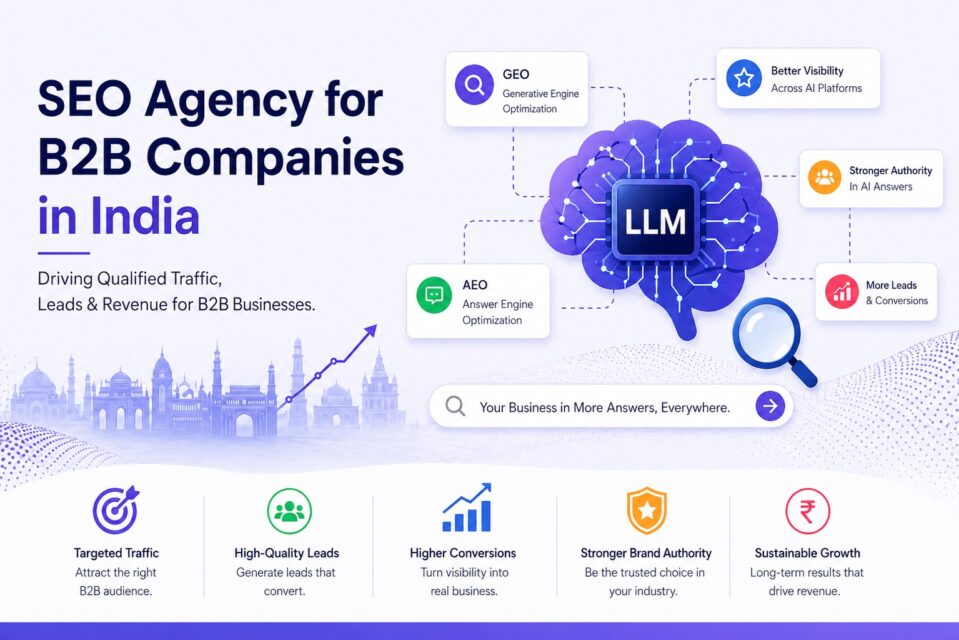
- SEO is not dead — it has evolved. In the AI era, SEO, GEO (Generative Engine Optimisation), and AEO (Answer Engine Optimisation) are interconnected, not competing.
- B2B buyers are informed specialists. They search with depth and precision — and SEO is how you meet them there.
- Authority, trust, and genuine expertise (E-E-A-T) are the foundation of SEO, AEO, and GEO alike.
- Long-term SEO compounds into brand equity, reduced ad spend, and superior ROI — especially in industries like manufacturing, technology, and consulting.
- Paid advertising has its place — but organic trust is what closes large B2B deals.
The Story We Got Wrong About SEO
A few years ago, “SEO” was the digital marketing buzzword that every business leader had opinions about. Then came the backlash. “SEO is dead,” said the headlines. “ChatGPT is replacing Google.” Agencies pivoted to AEO. Budgets shifted to paid channels. And a lot of B2B companies quietly walked away from the one marketing pillar that was actually building them something durable.
Here’s the thing — SEO was never dying. It was maturing. And in the age of AI-powered search, LLM chat tools, and answer engines, the businesses that invested in real, expertise-driven content are now reaping outsized rewards. The ones who didn’t? They’re paying more per lead than ever before.
This article is not a technical primer for digital marketing professionals. It is written for business leaders, founders, marketing heads, and CFOs who want to understand — from a purely business standpoint — why SEO is one of the most strategic long-term investments a B2B company in India can make right now.
| From a B2B digital marketing perspective, SEO is best understood as “long-term trust-driven marketing.” Everything else follows from that. |

What Do Search Engines and AI Really Want to Do?
Strip away the jargon and the answer is disarmingly simple: give the right information to the right person, reliably.
Google, Bing, ChatGPT, Perplexity, Gemini — they are all trying to solve the same problem, just through different interfaces. A search engine shows you a ranked list of sources. An LLM chat tool synthesises those sources and presents a direct answer. An answer engine extracts the precise fact you need. But all three are fundamentally hunting for the same thing: credible, contextually relevant, well-structured information.
This is not a coincidence. It is an architectural truth. And it is why SEO, GEO, and AEO are not competing priorities — they are three expressions of the same underlying principle.
SEO | GEO | AEO |
| Optimises your content so search engines rank and surface it. Foundation of all discoverability. | Generative Engine Optimisation — ensures your content is cited and referenced by AI tools like ChatGPT and Gemini. | Answer Engine Optimisation — structures your content so it is extracted as direct answers in search features and AI responses. |
The businesses appearing in AI-generated answers are almost exclusively the ones who invested in strong, authority-backed SEO. The pipeline runs in one direction: SEO builds the foundation that GEO and AEO build on top of.
Why B2B Is Different — And Why That Makes SEO Even More Valuable
B2B buying is not an impulse purchase. A procurement manager at an automotive OEM searching for a forged components supplier is not going to click on the most colourful ad. They will search for something very specific — a grade, a tolerance spec, an ISO certification, a case study from a comparable application — and they will assess vendors based on depth of knowledge, not brand recall.
This is the core insight that makes SEO disproportionately powerful in B2B: your buyers are already experts. They search with precision. They read with scepticism. And they respect demonstrated knowledge above all else.
SEO is the system by which you make your expertise discoverable — in exactly the language, format, and context that your buyer is searching for. It is not about gaming an algorithm. It is about ensuring that when a relevant specialist searches for something you genuinely know about, you are there.
| Large B2B deals are not closed by a great LinkedIn creative. They begin with credibility — and credibility begins with being found through organic search by someone who was already looking for you. |
The SEO–GEO–AEO Triad: One Strategy, Three Channels
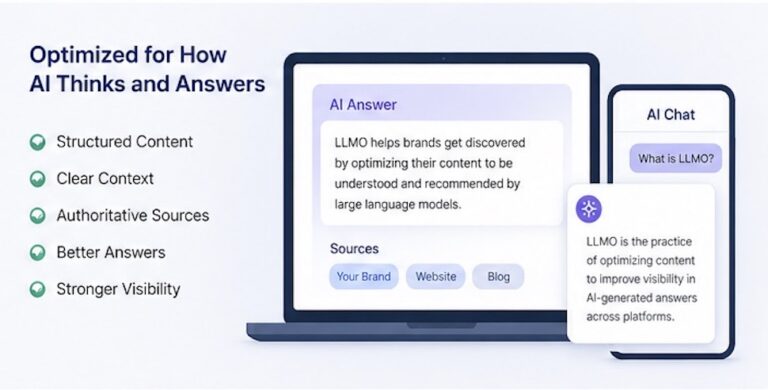
The most important message for business leaders navigating AI-era marketing is this: don’t let your agency treat SEO, GEO, and AEO as separate line items on a proposal. They are one unified approach to the same goal — building information authority that makes your business the trusted source across every discovery channel.
When an LLM model like ChatGPT or Perplexity answers a question about, say, “best EPC contractors in India for solar projects,” it draws on indexed web content, citations, and authority signals — the same raw material that traditional SEO optimises. Companies with strong content architecture, genuine credentials, and well-structured information pages will be cited. Companies without it will not, regardless of how much paid media they run.
E-E-A-T: The Framework That Ties It All Together
There is a concept in digital marketing called E-E-A-T — and while we would normally avoid jargon in an article like this, this one is worth knowing because it maps so cleanly onto how good B2B companies already think about their reputation.
E-E-A-T Component | What It Means for B2B |
| Experience | Demonstrated, first-hand project work. Case studies, project portfolios, client testimonials — proof that you have actually done the work, not just described it. |
| Expertise | Depth of technical knowledge. White papers, technical guides, certifications, industry publications — evidence that your team genuinely knows the subject. |
| Authoritativeness | Recognition from credible sources. Third-party citations, trade association memberships, industry awards, media mentions — external validation of your standing. |
| Trustworthiness | Transparency and reliability. Clear company information, accurate content, verifiable credentials, secure website — signals that tell both humans and algorithms you are legitimate. |
E-E-A-T is not a checklist to game. It is a description of what excellent B2B marketing looks like when it is done with integrity. And it is the lens through which both search engines and AI models evaluate whether your content deserves to be surfaced.
Good news for established companies: if you have a solid track record, certifications, published case studies, and genuine client relationships — you are already sitting on a repository of E-E-A-T signals that most start-ups would pay years to build. The task is to mobilise that material, not invent it.
Legacy Companies and Start-ups: The Same Destination, Different Starting Points
For established businesses with track records
You likely have decades of project experience, technical documentation, client relationships, and institutional knowledge sitting in folders and filing cabinets that have never been translated into digital marketing assets. This is a significant untapped advantage. Every case study, every certification, every technical specification document is potential SEO currency — the kind of genuine, expertise-driven content that algorithms and AI models actively prioritise.
For new companies and start-ups
The path is longer, but the principles are identical. Start with the fundamentals: certifications, documented processes, early-stage case studies, thought leadership content from your founding team’s experience. Industry knowledge does not appear overnight, but it does not have to. A well-structured content programme that consistently demonstrates genuine expertise will compound meaningfully over 12–24 months — and it will outlast any paid campaign you run.
Social Media and Creatives: Important, but Not Enough Alone
Let’s be direct: LinkedIn has become an essential channel for B2B visibility. A well-crafted creative showcasing a project milestone or an insightful case study snapshot will absolutely generate interest. But that interest needs somewhere to land — and that somewhere needs to be credible, information-rich, and optimised for conversion.
The mental model that works: social media is the hook, your website and content are the line. A compelling LinkedIn post about a successful industrial automation project should lead to a landing page with the full case study, technical specifications, client context, and a clear enquiry path. The creative creates curiosity. The content creates conviction. SEO ensures the whole journey is discoverable from search as well.
| Industry | Social / creative role | Content that closes | SEO / AEO asset |
| Industrial manufacturing | LinkedIn showcase of completed project | Technical case study with specs, tolerances, certifications | Product/capability pages indexed for OEM procurement searches |
| B2B technology / SaaS | Product demo clips, feature spotlights | In-depth comparison guides, integration documentation | Category + intent pages for industry-specific use cases |
| Management consulting | Thought leadership posts, data snippets | White papers, sector insight reports, methodology explainers | Long-form expertise articles ranked for sector + service queries |
| Engineering / EPC / infrastructure | Project milestone visuals, team highlights | Capability statements, project portfolio, accreditation documents | Service + geography pages optimised for tender-stage searches |
| Logistics / supply chain | Customer success snapshots, route highlights | SLA documentation, compliance certifications, sector experience pages | Solution pages indexed for vertical-specific logistics queries |
The Long-Term ROI Case: Why Your CFO Should Care About SEO
Paid advertising delivers results when it runs. The moment the budget stops, the leads stop. Organic search works the opposite way: the investment is front-loaded, the returns accumulate over time, and the marginal cost of each additional lead falls steadily as domain authority builds.
This compounding dynamic is the central ROI argument for SEO — and it is particularly powerful when modelled over a 3–5 year horizon.
Year 1 Foundation & content build | Year 2 Rankings grow, organic traffic increases | Year 3 Authority established, leads compound | Years 4–5 Cost-per-lead falls, paid dependency reduces | Long-term Brand + search equity = durable competitive advantage |
| Industry | Key SEO compounding benefit | Added long-term value |
| Industrial manufacturing | High-intent procurement queries; zero recurring ad spend | OEM vendor listing credibility, RFQ volume |
| B2B technology / SaaS | Long-tail feature queries drive trial sign-ups at near-zero cost | Reduced CAC, improved LTV:CAC ratio |
| Consulting / professional services | Thought leadership content drives inbound enquiries from senior buyers | Brand equity, premium positioning |
| Engineering / EPC | Capability and credential pages surface at pre-RFP stage | Shortlist inclusion without paid outreach |
| Logistics / supply chain | Location + vertical service pages drive qualified inbound | Sticky client relationships, reduced broker dependency |
| The compounding ROI of SEO is structurally similar to brand equity: the longer the investment horizon, the more favourable the return. This is fundamentally a CFO-friendly argument when modelled over 3–5 years. |
A Necessary Word on Paid Advertising
Nothing in this article should be read as a case against paid advertising. It has an important, sometimes irreplaceable, role in a well-constructed B2B marketing strategy. Paid search, paid social, and paid PR campaigns can generate qualified leads at speed — particularly for product launches, event-driven outreach, entering new markets, or seasonal spikes where organic reach simply cannot respond fast enough.
The distinction we are drawing is one of time horizon and dependency. An over-reliance on paid channels with no organic foundation is a structurally fragile marketing strategy — when budgets tighten, visibility disappears overnight. The goal is a portfolio approach: paid channels for acceleration, organic for durability, with each reinforcing the other.
What “Good SEO” Actually Looks Like for B2B Companies in India
This is not an implementation guide — your agency should handle that. But from a business leadership perspective, here are the markers of a genuine SEO strategy versus a superficial one:
| Genuine SEO strategy | Surface-level SEO (avoid) |
| Content built around real expertise, case studies, and credentials | Generic keyword-stuffed content with no industry depth |
| Technical structure that helps search engines and AI models parse your knowledge | Thin pages with no original insight or authorial authority |
| Consistent long-term programme with measurable milestones | One-time “optimisation” with no ongoing content strategy |
| Integration with your wider marketing assets — social, PR, case studies | SEO treated as an isolated tactic disconnected from brand strategy |
| Built to rank for what your buyers actually search for | Targeting high-volume generic terms with no buyer intent |
| Clear ROI framework tied to lead quality, not just traffic volume | Reporting only on rankings and impressions with no commercial context |

Organic Is Trust, and Trust Is the Only Moat That Compounds
There is no shortcut to being trusted. In B2B markets — particularly in technically oriented industries — the buyers who matter most are the ones who know exactly what they are looking for, and they can tell the difference between genuine expertise and manufactured visibility.
SEO, done with real knowledge and real credentials, is the system by which that trust is made discoverable. It takes longer than a paid campaign. It requires consistent effort. It demands that you actually have something meaningful to say. But once established, it does something paid advertising never can: it works when you are not paying for it, and it gets stronger over time and deployed strategically as a part of overall B2B digital marketing strategy, saves long term sales and client acquisition costs.
The AI era has not diminished the relevance of organic — it has amplified the premium on authority. The businesses that will dominate AI-generated search results, LLM citations, and answer engines over the next decade are the ones investing in genuine content today.
That is a strategy worth taking seriously.
Frequently Asked Questions
Q: Is SEO still relevant for B2B companies in India in 2026?
A: Yes — and arguably more relevant than ever. As AI search tools like ChatGPT, Perplexity, and Gemini become primary discovery channels, the content that gets cited and surfaced is almost entirely drawn from websites with strong organic authority. B2B companies that have invested in SEO are now visible across both traditional search and AI-generated answers. Those that have not are missing both.
Q: How is SEO different for B2B versus B2C companies?
A: B2B buyers are typically domain specialists — procurement managers, technical directors, or C-suite executives — who search with significant depth and precision. B2B SEO therefore prioritises expertise-driven content (case studies, technical white papers, certification pages) over high-volume generic keywords. The goal is not the most traffic — it is the most relevant traffic from buyers with genuine purchase intent.
Q: What is the difference between SEO, GEO, and AEO?
A: SEO (Search Engine Optimisation) helps your content rank on search engines like Google. GEO (Generative Engine Optimisation) ensures your content is cited by AI tools like ChatGPT and Gemini when they generate answers. AEO (Answer Engine Optimisation) structures your content to be pulled as direct answers in featured snippets and AI responses. All three rely on the same foundation: genuine authority, well-structured information, and trustworthy credentials.
Q: How long does SEO take to deliver results for a B2B company?
A: Meaningful organic results typically begin appearing in 6–12 months, with substantial compounding returns over 2–3 years. The timeline depends on how competitive the sector is, the quality and depth of content produced, and the existing domain authority of the website. Established businesses with existing credentials and case studies often see faster traction.
Q: Should B2B companies stop paid advertising and invest everything in SEO?
A: No. Paid advertising is an important and complementary part of a B2B marketing strategy, particularly for time-sensitive campaigns, market entry, or specific lead generation bursts. The ideal approach is a portfolio: paid channels for acceleration and short-term results, organic/SEO for long-term brand authority and compounding returns.
Q: What is E-E-A-T and why does it matter for B2B marketing?
A: E-E-A-T stands for Experience, Expertise, Authoritativeness, and Trustworthiness. It is the framework search engines and AI models use to assess whether a piece of content deserves to be surfaced to users. For B2B companies, it maps directly onto your existing credentials: project case studies, technical documentation, third-party citations, and transparent company information.
Q: How does SEO work with AI tools like ChatGPT and Perplexity?
A: LLM-based chat tools generate their answers by drawing on indexed web content and authority signals — very similar raw material to traditional search. Businesses that appear in AI-generated answers are almost always those with strong organic search presence. By investing in well-structured, expert-driven SEO content, B2B companies simultaneously build their visibility in traditional search and across AI discovery channels.
Notes & Disclaimers
- This article deliberately avoids technical digital marketing jargon. It is written for B2B business community members and is not intended for academic purposes.
- For SEO strategies and execution plans based on our business case studies in specialised B2B sectors, reach out with your business details and objectives to: info@acelogicsolutions.com
Published by Ace Logic Solutions — Digital Marketing Agency, Mumbai.
© 2026 Ace Logic Solutions. All rights reserved.
About Ace Logic Solutions:
Ace Logic Solutions is a digital marketing and brand strategy agency based in Mumbai, India. The agency helps businesses accelerate growth through integrated marketing solutions including brand strategy, website development, SEO, content marketing, social media marketing, and performance campaigns. The agency works with both B2B organisations and D2C businesses across multiple sectors such as engineering, manufacturing, financial services, and technology, focusing on long-term brand visibility and lead generation. With a research-driven and content-led approach, Ace Logic Solutions supports companies at different growth stages—from startups building market presence with the right GTM strategies to legacy businesses undergoing digital transformation.

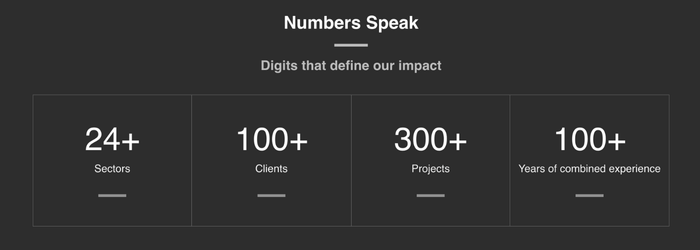
Ace Logic Solutions is a Mumbai-based digital marketing and brand solutions agency, founded in 2019. We specialise in building integrated digital marketing strategies for B2B and D2C brands across manufacturing, engineering, professional services, fintech, wellness, and technology sectors. With 100+ clients across 24+ sectors, our work spans brand strategy, social media management, performance marketing, SEO, LLMO, and integrated content strategies. Our verified corporate profile can be viewed via the official company page.
[…] boost: Earned media generates backlinks and brand queries that improve organic rankings; digital marketing turns that organic traffic into measurable conversion […]
[…] SEO & SERP for AI chat: Well-structured, authoritative content (schema markup, FAQs, topic clusters) increases the chance of being surfaced by AI assistants and LLM-powered search. […]
[…] Ranking for ‘contract manufacturer [sector] India’ and related procurement searches […]
[…] Ranking for terms that procurement teams, engineers, and operations managers actually search when th… […]
[…] This is where GEO (Generative Engine Optimisation) and AEO (Answer Engine Optimisation) come in. But here’s the insight most brands are still missing: these aren’t technical tricks or new hacks to learn. They are, at their core, the culmination of everything that real authority has always meant — just… […]
[…] brands chasing genuine credibility are, in practice, chasing the same outcome. This is good news: investing in real E-E-A-T, experience, expertise, authoritativeness and trustworthiness, pays off in… at once, rather than requiring two separate content […]
[…] Trust building, SEO, GEO, conversion […]
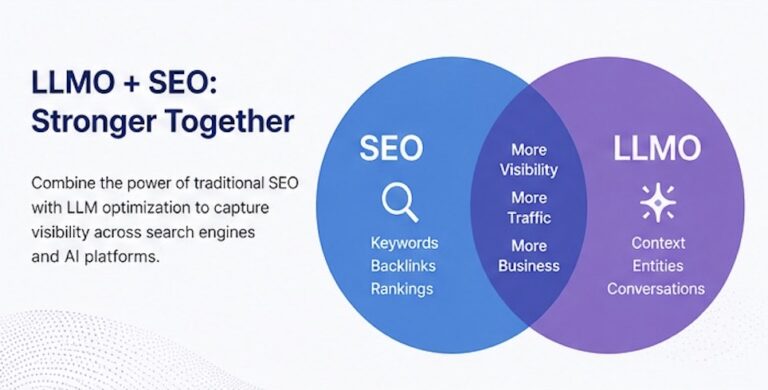
[…] stands for Large Language Model Optimisation. Just as SEO is about ranking on Google, LLMO is about ensuring your brand appears when AI tools like… answer questions relevant to your […]
[…] brands chasing genuine credibility are, in practice, chasing the same outcome. This is good news: investing in real E-E-A-T, experience, expertise, authoritativeness and trustworthiness, pays off in… at once, rather than requiring two separate content […]
[…] Ranking for ‘contract manufacturer [sector] India’ and related procurement searches […]
[…] growth through integrated marketing solutions including brand strategy, website development, SEO & LLMO, content marketing, social media marketing, and performance campaigns. The agency works with both […]
Comments are closed.